In a revealing new interview, hip-hop icons Juvenile and Mannie Fresh have detailed the crucial, and at times conflicting, business philosophies they absorbed from Cash Money Records founders Birdman and Slim. The duo, foundational to the label’s historic rise, shared these insights on the Nation of Podcast, reflecting on both the motivational drive and hard-nosed lessons imparted by the legendary brothers.
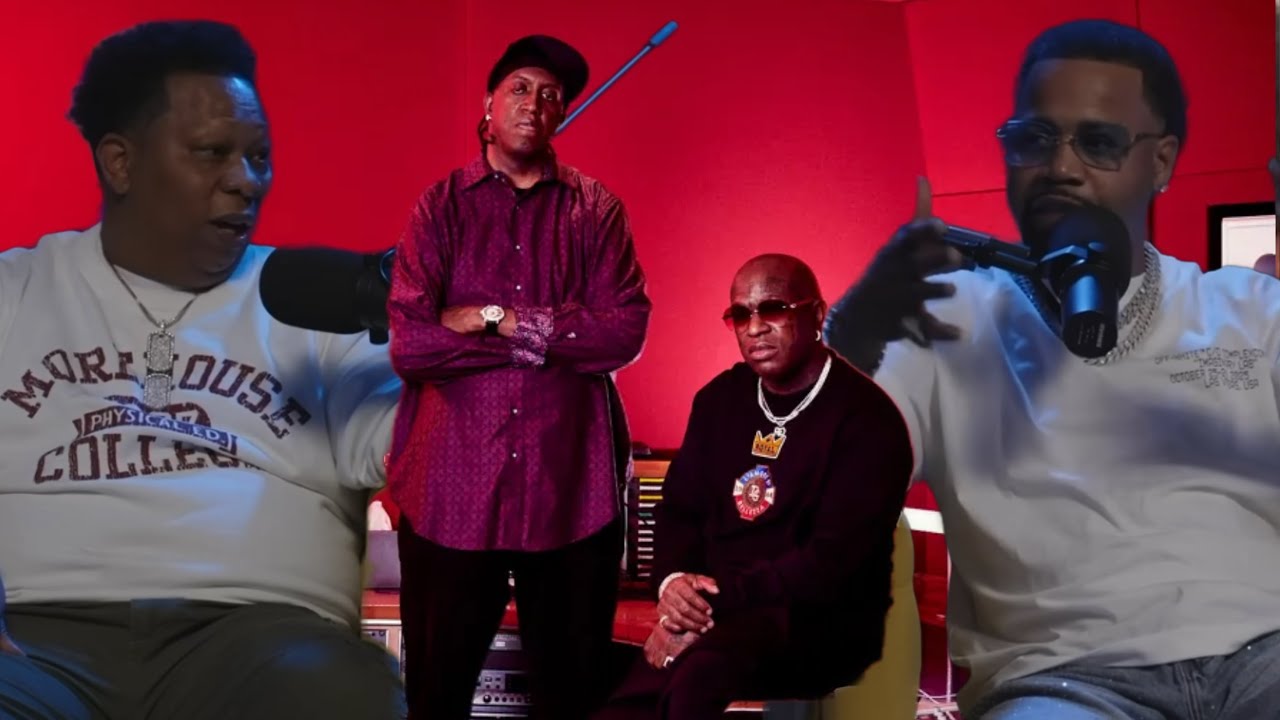 Juvenile described Birdman’s unparalleled ability to instill unwavering confidence, even in the face of seemingly insurmountable odds. He painted a picture of a leader whose conviction could rally his team from any deficit. “We could be down by 48 points, 2 seconds left,” Juvenile said, recalling Birdman’s attitude. “He going to come in that talking to you… ‘We going to win this .’ He can convince you.”
This relentless optimism, according to Juvenile, was a key ingredient in Cash Money’s success. During moments of weakness or doubt, Birdman possessed a unique skill to maneuver around obstacles and reframe challenges, compelling his artists to push forward. It was a psychological edge that fostered resilience within the camp’s early roster.
Conversely, Mannie Fresh highlighted a more combative lesson rooted in self-belief and competitive fire. He explained that Slim and Birdman consistently drilled into their artists that no one in the industry was superior. “They used to always… say, ‘Man, that ain’t bigger than you,’” Fresh recalled. The directive was clear: never place anyone on a pedestal.
This mindset, Fresh admitted, “created a monster” within him, fostering the defiant attitude that characterized his early public persona. The lesson was about maintaining a competitive stance against all rivals, believing fully in one’s own product and potential until it was proven in the marketplace. It was a doctrine of self-empowerment forged in the trenches of the music industry.

Yet, from Slim specifically, Fresh learned the power of strategic silence—a stark contrast to a stereotypical “hood mentality” of immediate vocal confrontation. “Sometimes… the law office of such and such going to fight that battle for you,” Fresh noted. “When I send you these papers, that’s going to get your mind right. That’s loud enough.” This lesson underscored the transition from street tactics to boardroom strategy.
The conversation naturally turned to the concept of risk, a theme deeply intertwined with their Cash Money experiences. Juvenile framed success as a product of bravery in the face of the unknown. “You have to be brave enough to go through a lot of doors that you don’t know what’s on the other side,” he stated, acknowledging his own moments of uncertainty before seizing opportunities.
Mannie Fresh expanded on this, emphasizing that successful risk-taking is a learned skill. “You not just take risk, you got to learn to take risk,” he clarified. He stressed the importance of ensuring one’s risks are personal and do not unjustly sacrifice others. Both artists linked their greatest successes to these calculated leaps into the unknown.

Juvenile pointed to a pattern of resilience, noting that the most successful people endure cycles of gain and loss, extracting vital lessons each time. Crucially, he argued that a key component of that success is the refusal to hold grudges. “You have to take the good with the bad,” he said, comparing business setbacks to rejection at a dance before moving on to the next prospect.
For Mannie Fresh, his ultimate risk was believing in and branding himself independently, stepping out from the collective shadow of Cash Money. “I am a force all by myself,” he explained, calling this self-belief “very, very hard” to maintain. He also revealed that he is often at his best when challenged, citing the competitive fuel from his 𝓿𝒾𝓇𝒶𝓁 Verzuz battle with Scott Storch as a catalyst.
The podcast host, Oheay, provided critical context, reminding listeners of the duo’s historic financial disputes with Cash Money. He noted that while the early deals were “all messed up”—a common scenario for young artists seeking an escape—Birdman ultimately rectified the situation by paying outstanding royalties to Juvenile, Fresh, Turk, and others, an act that earned respect.

This resolution underscored the final, hard-won lesson: the paramount importance of business acumen. The experience taught them to meticulously review contracts and understand every commercial detail. As the host concluded, “if the business is bad, it ain’t no business.” The revelations from Juvenile and Mannie Fresh offer a masterclass in the duality of the music industry.
Their stories illustrate how the same mentors can teach both unshakeable faith and ruthless self-reliance, raw competition and calculated legal strategy. These lessons, forged in the fire of building a cultural empire, navigating painful conflicts, and achieving eventual reconciliation, transcend music. They serve as foundational principles for entrepreneurship and survival in any high-stakes arena.
The legacy of Cash Money, as dissected by two of its most pivotal architects, is thus not merely one of iconic music but of complex education. It is a legacy built on Birdman’s convincing dreams, Slim’s quiet power plays, and the artists’ eventual empowerment to own their value, take bold risks, and master the business behind the art.