A simmering feud between two of hip-hop’s biggest names has exploded into a public and deeply personal war of words, centering on the volatile intersection of authenticity, survival, and success. Atlanta’s 21 Savage has issued a blistering, expletive-laden response to New York drill artist Fivio Foreign after his comments on the DJ Akademiks podcast questioned Savage’s background and right to critique street life.
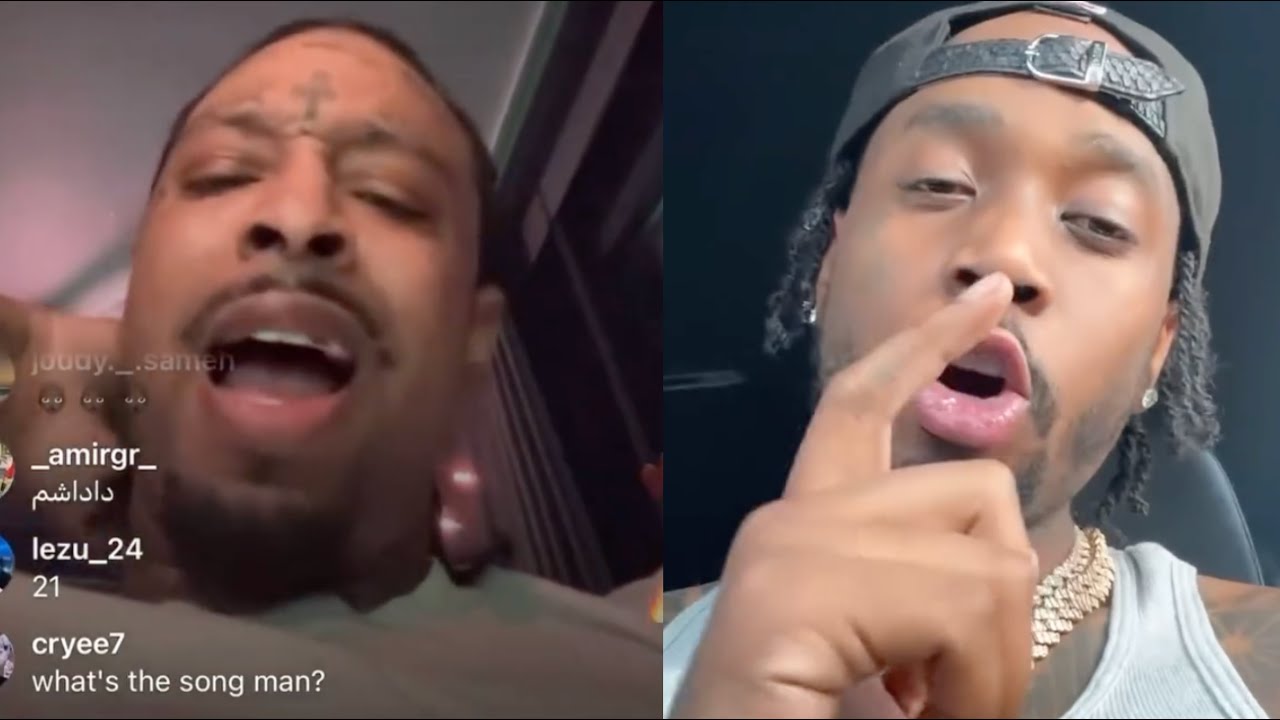 The controversy stems from 21 Savage’s recent public stance advocating for moving beyond street mentality, a message he frames as a life-saving critique of a cycle of violence. This perspective, however, landed with a thud in certain circles, particularly with artists rooted in drill’s gritty narratives. The clash of philosophies reached a boiling point when Fivio Foreign appeared as a guest.
During the podcast interview, Fivio was directly asked about 21 Savage’s “F the streets” messaging. His response was dismissive and challenging. Fivio repeatedly cast doubt on 21 Savage’s lived experience, suggesting his reputation was built more on musical stature than street credibility. He framed it as a geographical and cultural divide, implying true street legitimacy is hyper-local.
“The same thing I’ve heard about Baby [Lil Baby] when it come to be within how they get down, same thing I’ve heard about Savage,” Fivio said, weaving a narrative of second-hand reputation. He later escalated by invoking the name of incarcerated Brooklyn rapper 6ix9ine, questioning why he could diss 21 Savage “so much” without immediate repercussion.
Fivio’s core argument posited that 21, having achieved monumental financial success, was now disingenuously criticizing the very environment that shaped his art. In the sacred code of street culture, this was perceived as a profound betrayal of loyalty and a denial of roots. The implication was clear: 21 Savage was an outsider lecturing from a position of safety.

The response from 21 Savage was not a crafted diss track but a raw, unfiltered social media video that quickly went 𝓿𝒾𝓇𝒶𝓁. Speaking with a calm yet venomous intensity, 21 Savage systematically dismantled Fivio’s assertions with brutal specificity. He commanded Fivio to stop using his name for clout and attacked the foundation of his critique.
“Shut your *ass up. Stop saying my name,” Savage began, his tone icy. “If your ass walking around with a .38, don’t say nothing to me about the street. Straight up. If your ass 35 or older and you been trying to rap since you was goddamn 17, 16, 15, don’t say nothing to me about the street. You don’t know nothing about the street.”
This was more than a rebuttal; it was a character assassination aimed at Fivio’s age, career trajectory, and personal history. 21 Savage painted Fivio as a lifelong aspiring rapper chasing relevance, disconnected from the visceral trauma that informs his own perspective. “Y’all ain’t seen enough in the street to even feel how I feel about the street,” he stated, drawing a line between observation and lived pain.

The Atlanta mogul then flipped the financial script, mocking Fivio’s economic status while clarifying his own mission. “Washed up ass. Broke ass talking all that tough ass in that interview,” he said, before pivoting to his broader message. “I’m trying to change my life. I’m trying to save the streets… But don’t get it twisted for a second. Do not think this sweet.”
This explosive exchange transcends typical hip-hop beef. It represents a fundamental ideological rift within the genre. On one side is 21 Savage’s ethos of evolutionary survival—using success as a means of escape and advocating for a future beyond the block. He positions his critique not as an attack on individuals, but on a destructive system.
On the other side stands Fivio Foreign’s embodiment of traditional drill authenticity, where the streets are an inescapable, defining truth, and loyalty to that reality is paramount. His critique frames 21’s message as a hypocritical abandonment of origin, a luxury afforded by wealth but not granted by experience.

The fallout has ignited social media, fracturing along predictable yet passionate lines. Supporters of 21 Savage applaud his mature, pragmatic stance and his direct challenge to what they see as glorified stagnation. They argue his financial independence grants him the freedom to speak hard truths without fear.
Defenders of Fivio Foreign uphold the principle of cultural authenticity, arguing that one cannot profit from a narrative and then condemn its source. They view 21’s comments as disrespectful to those still navigating the realities Fivio describes in his music.
Industry observers are now watching closely. The conflict touches raw nerves concerning class, geography, generation, and the very soul of hip-hop storytelling. While currently contained to interviews and social media clips, the history of the genre suggests such deeply personal disputes often escalate into musical volleys.
The central question now hanging over the industry is whether this remains a war of philosophical statements or evolves into a full-blown lyrical conflict. With both artists holding significant platforms and fanbases, any escalation would dominate the cultural conversation. For now, the battle lines are drawn not over beats or charts, but over the right to define reality, legacy, and the path forward from the streets that made them.