Hip-hop mogul and entrepreneur Rick Ross has dramatically escalated his long-standing fascination with exotic animals, unveiling two lion cubs as his newest companions and drawing a direct, self-proclaimed comparison to boxing legend Mike Tyson. The rapper, known for his “biggest boss” persona, shared the footage in a video posted by DJ Y, immediately igniting a firestorm of reactions across social media and raising serious questions about safety and legality.
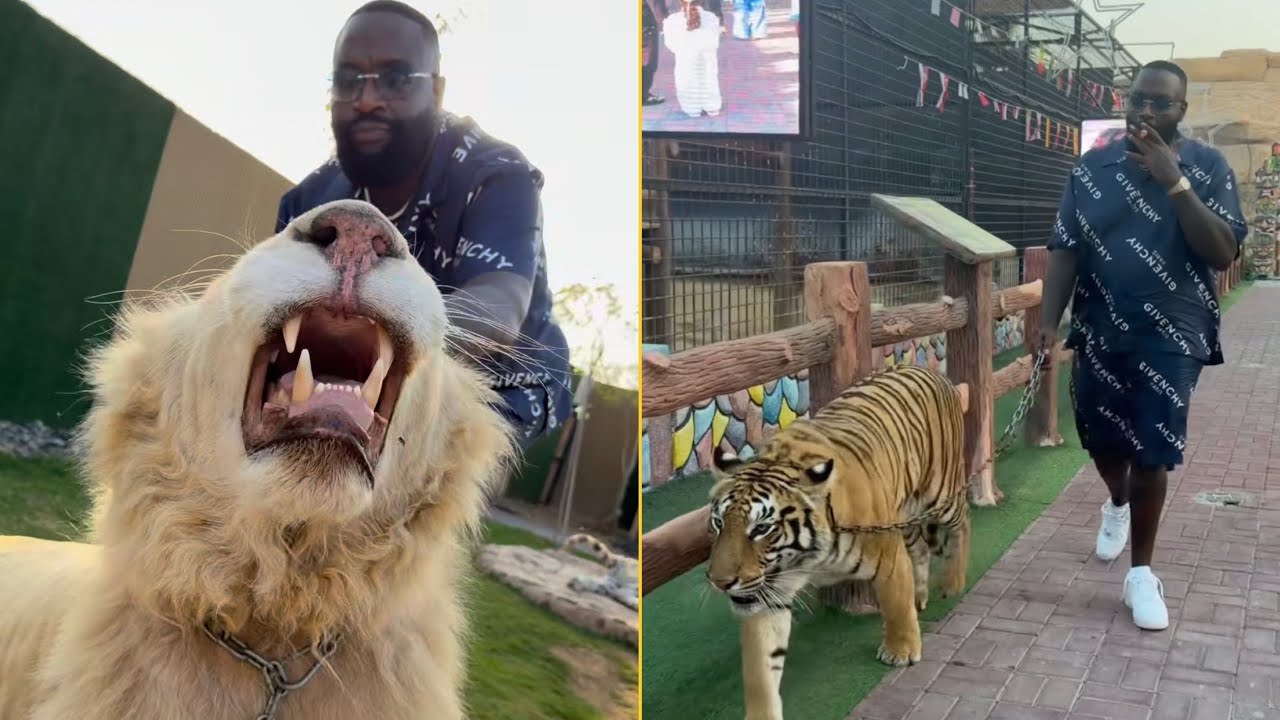 In the clip, Ross is seen interacting closely with one of the cubs, which he names Simba. “I’m introducing y’all to Simba,” Ross states to the camera, emphasizing the authenticity of the moment with a declaration, “This ain’t no AI.” The visuals then cut to a striking image of Ross walking the young lion on a leash across the expansive grounds of his Georgia estate, dubbed the Promise Land. The imagery is undeniably powerful, crafted to reinforce his larger-than-life brand.
The narrative within the video quickly pivots to a bold claim from fans, which Ross implicitly endorses. A voiceover states that “some fans saying that Rick Ross is moving like OG Iron Mike aka Mike Tyson,” a reference to the former heavyweight champion’s own notorious history of keeping tigers as pets during his career’s peak. This comparison appears to be one Ross welcomes, framing his actions within a legacy of formidable, untamable celebrity.
Animal rights organizations are already expressing profound alarm at the development. Specialists point out that lions, even as cubs, are inherently wild predators with complex needs impossible to meet in a domestic setting. “This is not a status symbol; it is a sentient being with instincts that cannot be suppressed by a leash,” stated a spokesperson for the Animal Welfare Institute in an initial reaction. “As these animals grow, they become uncontrollably powerful and dangerous, leading to tragic outcomes for both the animals and people.”
 The legal ramifications of owning such an animal in Georgia are complex and vary by county. While the state has relatively lax exotic pet laws compared to others, local ordinances and permit requirements can be stringent. Authorities in Fayette County, where Ross’s estate is located, have not yet issued a public statement regarding whether the rapper possesses the necessary permits or if his setup meets the stringent caging and insurance requirements typically mandated for Class I wildlife.
Public safety is the immediate concern for local residents and officials. Wildlife experts universally condemn the practice of keeping big cats as pets, noting that countless incidents have resulted in severe injury or death. The sight of Ross casually walking the lion, while intended to project control, is seen by experts as a potentially dangerous normalization of deeply risky behavior. Neighbor concerns are anticipated to mount as the animals mature.
This move by Rick Ross is not an isolated incident but an escalation of his well-documented affinity for exotic fauna. His estate already functions as a private zoo, housing zebras, buffalo, and a variety of other species. However, the acquisition of apex predators like lions represents a significant and more hazardous new chapter. The Mike Tyson comparison is particularly poignant, as Tyson’s own tiger ownership was marred by a highly publicized incident where one of his pets severely mauled a person.

The cultural impact of such a display is multifaceted. Within the context of hip-hop’s history of lavish and defiant symbolism, owning a lion is perhaps the ultimate testament to perceived power and dominance over nature itself. Yet, in an era of increased awareness about animal exploitation and responsible ownership, the act is also generating significant backlash from fans and critics alike who view it as an irresponsible stunt.
Financial and logistical realities cannot be ignored. The lifetime cost of caring for multiple lions, including specialized veterinary care, appropriate nutrition, and ultimately, massive secure enclosures, runs into the hundreds of thousands of dollars. Furthermore, reputable sanctuaries report being overwhelmed with former “pet” big cats that owners can no longer manage, a likely eventual outcome privately feared by animal advocates.
 As the video continues to virally spread, the pressure on local and state authorities to investigate the legality and conditions of this arrangement will intensify. Environmental protection and animal control agencies are likely already reviewing the case. Any lapse in permitting or enclosure standards could result in severe fines and the seizure of the animals.
The broader conversation now shifts to celebrity influence and responsibility. Rick Ross commands an audience of millions, and his actions are emulated by fans. By showcasing lion ownership as an aspirational symbol of success, he potentially inspires dangerous copycat behavior. Advocacy groups are preparing campaigns highlighting the suffering behind the exotic pet trade, hoping to counter the glamorous imagery with harsh reality.
For now, Rick Ross has solidified his “biggest boss” imagery in the most primal way possible. The sight of the rapper with a lion on a leash is designed to be iconic, a modern-day fusion of kingly symbolism and hip-hop bravado. Yet, the roar of controversy is just beginning, with animal welfare, legal scrutiny, and public safety concerns forming a gathering storm around the Promise Land. The world will be watching closely to see if this story ends with a regulatory crackdown, a tragic incident, or a reluctant retreat—a narrative arc Mike Tyson himself is all too familiar with.