A newly surfaced video has ignited a firestorm online, alleging rapper and Dipset co-founder Jim Jones once attempted to orchestrate a group 𝒶𝓈𝓈𝒶𝓊𝓁𝓉 on former Roc-A-Fella executive Dame Dash before backing down from a direct confrontation. The clip, emerging from the complex history of Harlem’s hip-hop scene, portrays a tense street encounter that veteran observers confirm aligns with long-rumored stories of a major falling out between the two figures.
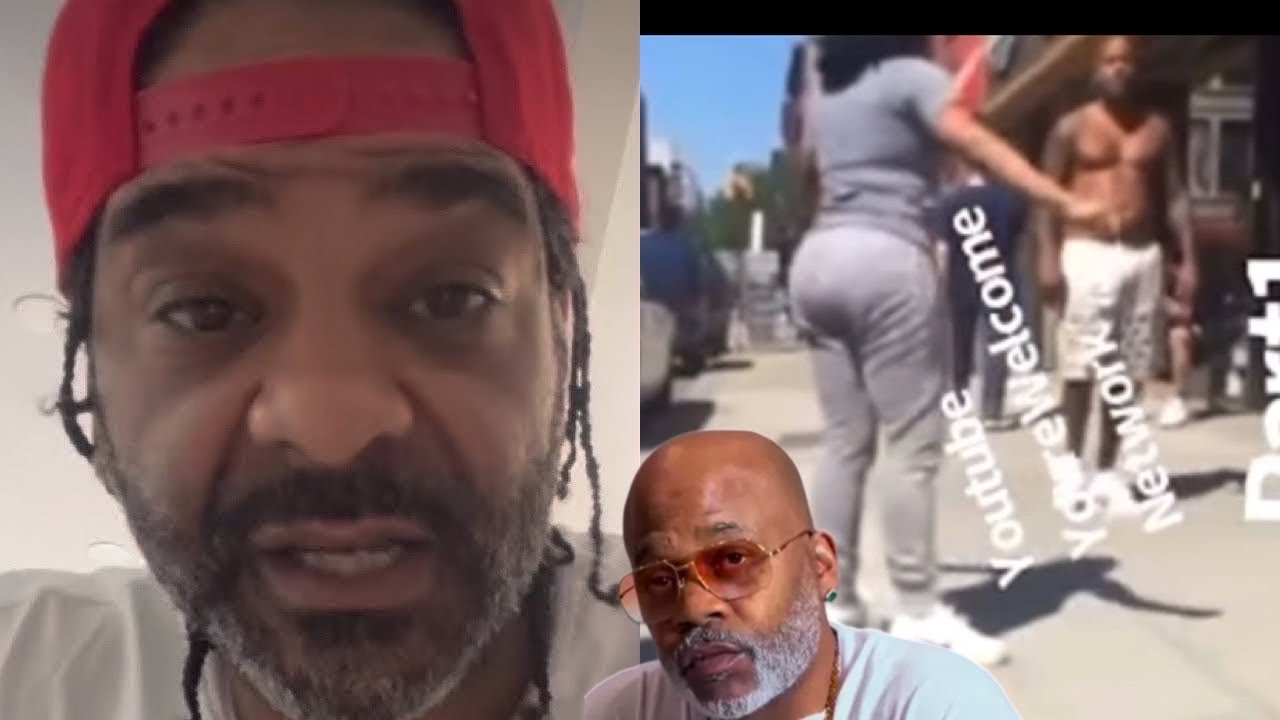 The video, uploaded by an associate known as Freaky Zeke, captures a heated argument on a New York City street. A voice, identified by the uploader as Jim Jones, is heard aggressively urging others to engage with Dame Dash, who stands his ground. “Get off my block then,” a voice challenges, with another retorting, “You can’t do nothing.”
Crucially, the exchange includes a voice stating, “Remember that time when Dame asked you for the fair one? You brought the homies out there and they told you, ‘Nah, you hit them up.'” The term “fair one” is street parlance for a one-on-one fight, implying Jones allegedly arrived with a group but declined Dash’s challenge for a solo confrontation.
The individual who released the footage, Freaky Zeke, stated he published it in response to Jones recently labeling others as “soft.” His caption directly accused Jones: “The time you tried to pull up on Dame and he wasn’t having it. You tried to get the homies to jump Dame. They told you nah, shoot the fair one.”
This incident is not entirely new to public discourse. Dame Dash himself has alluded to this confrontation in past interviews on his platform, stating he was willing to fight Jones one-on-one but that Jones refused and instead wanted his associates to handle the matter. The video appears to provide visual and audio corroboration for those claims.
In the footage, a woman’s voice, believed to be that of Jones’s longtime partner Chrissy Lampkin, is heard pleading, “Baby, please. You can’t let this happen,” attempting to de-escalate the situation. Her presence and urgent tone underscore the serious volatility of the moment, suggesting the potential for significant violence was very real.
 The release has triggered widespread commentary across social media and urban media outlets, with many criticizing the actions depicted as a “bad look.” Commentators have emphasized that the behavior, allegedly soliciting others to fight a personal battle one refuses to engage in personally, is considered a profound breach of street ethics.
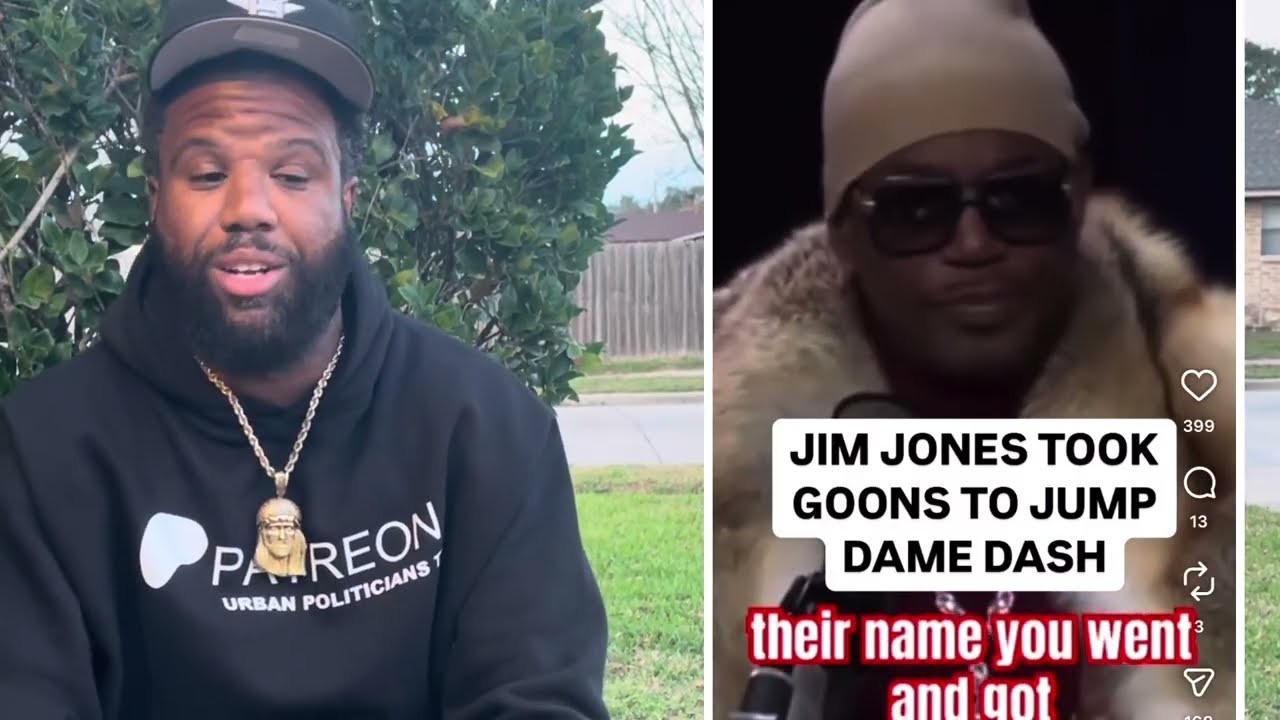
“This is not recent. This is not new. This is old,” stated one commentator on the UPTV channel, which dissected the footage. “You could tell Jim Jones got the shorter fro. It’s some years ago.” Despite its age, the video’s emergence in the current digital climate has given it a potent second life, fueling discussions about reputation and past conflicts.
The commentator further analyzed the dynamics, stating, “You can’t be the guy like, ‘Hey, you can’t take people to go do something that you wouldn’t do yourself.’… It’s like you were basically just volunteering their services for violence.” This sentiment reflects a core criticism: that the alleged actions placed associates at risk for a personal grievance.
The fallout also touches on the legacy of the iconic Dipset crew and the intricate, often contentious relationships within Harlem’s hip-hop community. The video serves as a stark reminder of the street-level disputes that sometimes underpinned the genre’s glamorous facade during the early 2000s era.
Jim Jones has yet to publicly address the specific contents of this surfaced video. His current public focus has been on business ventures, including opening a new studio. This archival clip, however, threatens to pull the narrative back to a more turbulent chapter of his past.
Dame Dash has not issued a new statement following the video’s release, having previously narrated his version of events. The visual evidence now circulating adds a compelling, unvarnished layer to that history, leaving little to the imagination about the tension described.
Industry observers note the video’s 𝓿𝒾𝓇𝒶𝓁 spread was amplified by the ongoing feud between Jim Jones and Curtis “50 Cent” Jackson, with many waiting to see if Jackson would leverage the footage for further ridicule. While 50 Cent has not directly reposted it, the mere anticipation fueled its circulation.
The incident raises questions about the lasting impact of such revelations in the digital age, where decades-old conflicts can be resurrected with full audiovisual evidence. For public figures with roots in street culture, managing this historical footprint becomes an increasingly complex challenge.
As of now, the court of public opinion is actively session. The video stands as a contentious piece of hip-hop history, challenging the narrative control of those involved and serving as a potent example of how the past can resurface with undeniable force. The focus now shifts to whether any involved parties will offer a direct response.
 The broader conversation extends beyond the individuals to the codes of conduct and loyalty within crews. The allegation that Jones’s own associates refused to “jump” Dash is a critical element, suggesting internal dissent and a respect for Dash’s stance even in a moment of high tension.
This episode underscores the intense, personal nature of hip-hop’s foundational rivalries, which often blended business, personal slights, and territorial pride. The surfaced footage provides a raw, unfiltered window into that world, far removed from staged beefs and recorded diss tracks.
For fans and historians of the culture, the video is a significant artifact. It tangibly connects to a period of great creativity and equally great conflict, when the lines between artistic collaboration, business partnership, and street rivalry were frequently blurred and dangerously crossed.
The ultimate impact on Jim Jones’s reputation remains to be seen. While some may dismiss it as ancient history, others view it as a character-revealing moment that contradicts his current cultivated image as an elder statesman and entrepreneur. The durability of this 𝒔𝒄𝒂𝓃𝒅𝒂𝓁 will test the power of contemporary redemption narratives.
In the absence of an official statement, the narrative is being shaped by commentators and the public. The urgency to respond may grow as the video continues to circulate, but any comment risks re-inflaming a situation many might prefer to leave in the past. The choice between silence and address is itself a strategic calculation.
The story continues to develop as more voices from the urban commentary sphere weigh in, dissecting every frame and audio cue. This incident proves that in today’s media landscape, no chapter is truly closed if evidence exists to reopen it, ensuring this clash will be analyzed and debated for the foreseeable future.