The accused vascular surgeon, Michael McKe, is now in an Ohio jail, facing a grand jury indictment that adds new, grave charges in the execution-style killings of his ex-wife and her husband. His stone-faced mugshot, released by authorities this week, offers the first look at the man since his extradition from Illinois to answer for crimes that have horrified the Columbus community.
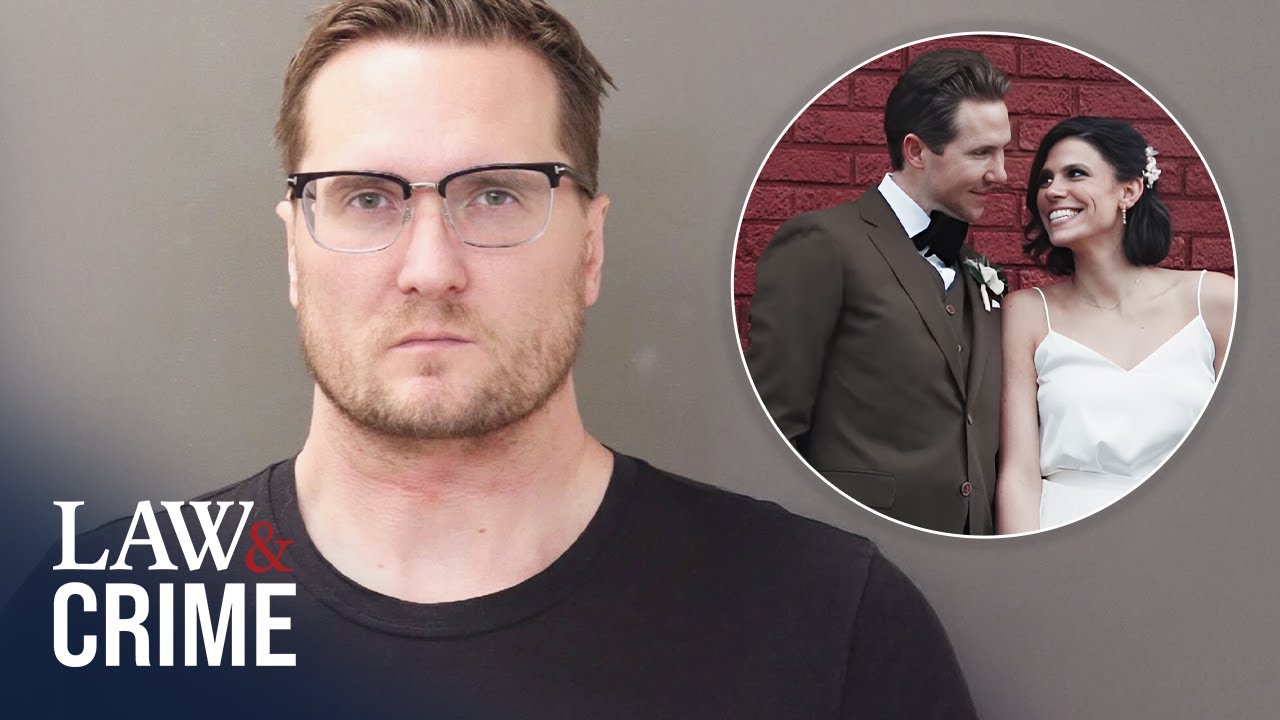 McKe stands formally accused of murdering Mon’nique Teppe, his ex-wife, and her husband, prominent dentist Spencer Teppe, in their bedroom in the early hours of December 30th. Their two young children, aged four and one, were home at the time but were physically unharmed. The indictment elevates the charges from two counts of aggravated murder to four, and adds one count of aggravated burglary.
A critical new specification alleges McKe was armed with a firearm equipped with a suppressor, or silencer, during the commission of the offenses. This detail underscores what prosecutors may argue was a calculated, premeditated attack intended to avoid detection in the quiet suburban neighborhood.
The path to this moment began with a seven-hour drive. Police allege McKe traveled from his workplace in Rockford, Illinois, to the Teppe home in Columbus, committed the murders, and then drove back to Illinois. He was arrested over ten days later by federal ATF agents at a Chick-fil-A near his workplace.
Investigators have drawn several preliminary forensic links. During a search of McKe’s luxury Chicago high-rise apartment, police recovered weapons, including one they preliminarily connect to the murder scene. Surveillance video from the Teppe’s neighborhood, showing a person of interest walking behind the home around the time of the killings, is now believed by police to depict McKe.

The motive for the violence, erupting years after an apparently amicable divorce, remains a central mystery. The couple divorced in 2017 after a brief marriage, with court documents stating the parties were “incompatible.” The separation agreement included a clause forbidding each from entering the other’s residence without permission—a provision now cast in a tragic light.
In the wake of the murders, a portrait of McKe as a brilliant but isolated individual has emerged from public records and acquaintances. A valedictorian, National Merit Scholar, and accomplished athlete in his Ohio youth, he built a career as a vascular surgeon. Yet former neighbors described a solitary figure, and a woman claiming to be an ex-girlfriend said he was emotionally distant, with “a wall up.”
That woman, in a since-deleted TikTok video, claimed McKe told her the divorce was a shock, alleging he came home to find Mon’nique and her belongings gone. This contrasts with statements from Spencer Teppe’s family, who told Law&Crime they believe McKe was verbally abusive during the marriage, precipitating its end.

Further scrutiny reveals professional turmoil in McKe’s recent past. At the time of the murders, he was a defendant in a Nevada medical malpractice lawsuit where process servers repeatedly failed to locate him. Court documents state his own office reported he had “disappeared,” and his Nevada surgical license had expired.
McKe waived extradition in a brief Illinois court appearance, calmly stating his name, and was transferred to Ohio custody. His extradition attorney indicated he will plead not guilty. His arraignment in a Columbus courtroom is scheduled for Friday afternoon.
Legal experts note the severity of the upgraded charges. “Aggravated murder means that there was something else going on in the process,” explained retired Ohio Judge Fernan Rucker during a Law&Crime analysis. The penalties are significantly heightened, ranging from life with parole eligibility after 20 to 35 years, to life without parole. The indictment does not currently seek the death penalty.

Columbus Police Chief Elaine Bryant has characterized the killings as an act of domestic violence. However, the question of why McKe allegedly acted now, nearly a decade after the divorce, looms large over the case. While motive is not a required element for conviction, investigators are meticulously building a timeline of his actions and state of mind in the preceding months.
Defense attorneys will likely scrutinize the admissibility of the evidence, including the weapon recovered from his Chicago apartment and the video surveillance identification. “Proof beyond a reasonable doubt is the highest standard that we have,” Judge Rucker noted, emphasizing that each piece of evidence must survive legal challenges before a jury can consider it.
As the case moves toward trial, it promises sustained national attention, combining elements of a shattered domestic life, a fallen professional, and a brutal, cross-state crime. The community, and the victims’ families, now await the next steps in a courtroom, seeking justice for a double homicide that has left two children without their parents.