The long-simmering tension between hip-hop titans Drake and A$AP Rocky has erupted into a full-blown public feud, with Rocky revealing the intensely personal catalyst: a perceived slight against his partner, global icon Rihanna. In a revealing interview, Rocky accused Drake of taking “shots” at his family, fundamentally reshaping the narrative around their clash from one of musical competition to one of personal respect and historic romantic entanglements.
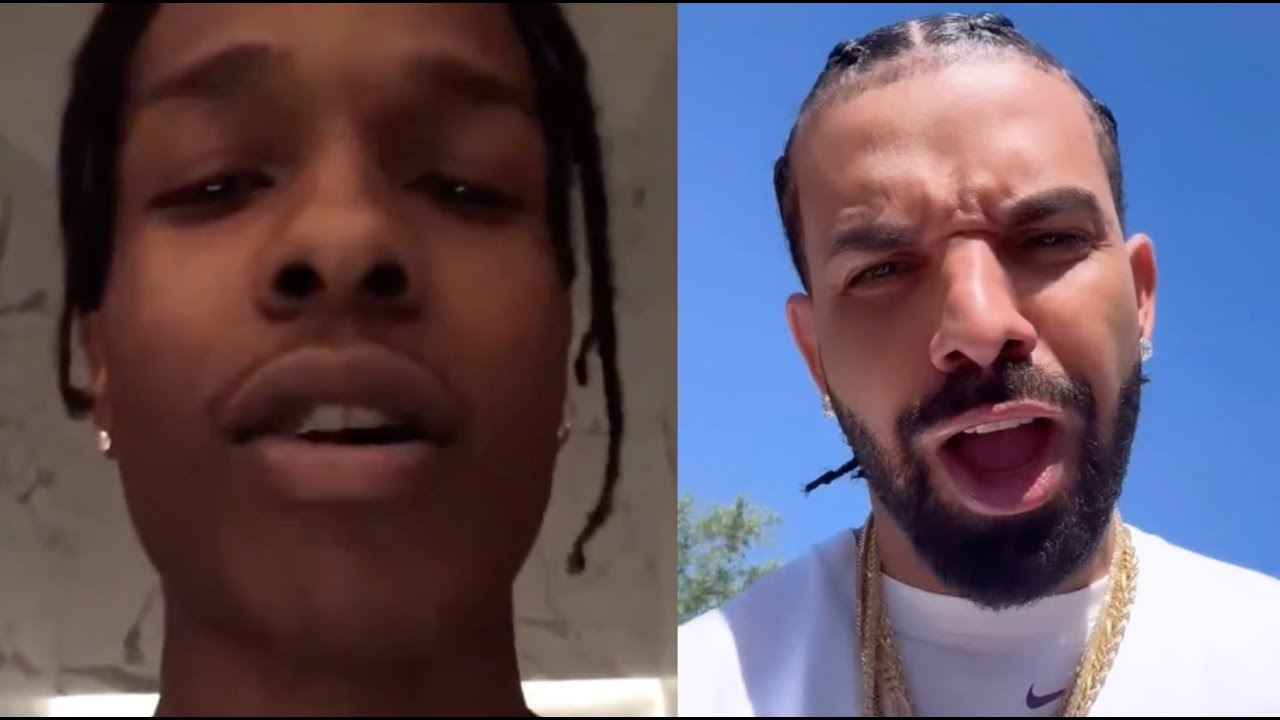 For years, the two artists moved in the same elite circles, sharing stages and fashion accolades without public incident. That détente shattered in 2024 when Drake, embroiled in a separate rap battle, openly called out Rocky, accusing him of inserting himself for clout and predicting a mediocre musical response. Drake’s lyrics were pointed, mocking Rocky’s fashion focus and release schedule.
The conflict, however, stretches back far deeper. Rocky, in a conversation with media personality DJ Akademiks, provided a definitive timeline and motive. He stated his recent musical retort was solely because he felt Drake “took a shot at my girl.” This reference, according to Rocky, stems from a comment Drake made during a tour stop weeks prior, disparaging the act of performing the song “Work.”
“Work,” the monumental 2016 hit by Rihanna featuring Drake, is a cornerstone of both artists’ catalogs. Rocky interpreted Drake’s expressed disdain for performing it as a direct and disrespectful dig at Rihanna herself. “Stop acting oblivious. You acting dumb now,” Rocky told Akademiks, insisting the diss was clear.
This revelation reframes Rocky’s recent track “Stole Your Flow” not as opportunistic, but as a defensive strike. It shifts the feud’s center from chart positions and rap prowess to the defense of family, with Rocky drawing a firm line: criticism of him is one thing, but involving his partner and mother of his children is unacceptable.
 The interview took a more complex turn as Akademiks presented an alternative origin story, suggesting the rift began years earlier at Rocky’s Yams Day festival in 2020. According to this narrative, Drake was invited, flew out, but was allegedly denied a chance to perform. The account suggests Rihanna, newly in a relationship with Rocky at the time, was present and acknowledged the situation.
A source in Akademiks’s retelling claimed Rihanna quipped that Drake wouldn’t perform because of an “insecure dude,” implying Rocky. This anecdote, if accurate, paints a picture of a slight that may have festered within Drake, intertwining professional disrespect with personal history.
This history is the feud’s undeniable bedrock. Drake’s well-documented past romance with Rihanna adds profound emotional stakes. Rocky is not merely a rival rapper; he is the man who built a family with a woman Drake once loved. This context transforms lyrical barbs into potential expressions of a deeper, unresolved sentiment.
The musical response has sparked debate about Rocky’s artistic direction. Critics, and even Drake himself, have questioned if engaging with Drake has become central to Rocky’s musical identity. Some commentators lament that discussion of Rocky’s new work is dominated by the dissension, overshadowing the music itself.

Yet, commercially, the strategy has yielded results. Rocky’s recent project secured his first-ever #1 debut on the global Spotify chart, a massive achievement fueled by a high-profile rollout, fashion spectacle, and the inescapable buzz surrounding the feud. The personal has proven to be powerfully marketable.
Despite this, Drake’s commercial dominance remains a towering reality in the industry. His streaming numbers are historic and consistent, setting a benchmark few can challenge. This disparity highlights the two fronts of this battle: one is measured in immediate cultural impact and 𝓿𝒾𝓇𝒶𝓁 moments, the other in sustained, record-breaking consumption.
The feud now exists in a nebulous space between genuine personal grievance and calculated professional maneuvering. Is Rocky primarily a protector of his household, or is he leveraging a deeply personal narrative for album promotion? Is Drake motivated by lingering hurt, competitive fury, or a combination of both?
 What is clear is that the lines have been irrevocably drawn. This is no longer a vague war of words. Rocky has explicitly stated his red line was the honor of his family, directly linking the conflict to Rihanna. Drake, through his earlier lyrics and the alleged Yams Day incident, has been implicated in a years-long pattern of subtle and not-so-subtle antagonism.
The hip-hop community and fans worldwide are left to dissect the layers. The conflict encapsulates modern celebrity: a volatile mix of artistic pride, historic romance, brand management, and social media amplification. It is a story about ego, legacy, and the price of love in the public eye.
As both artists continue to release music and make public appearances, every line will be scrutinized, every gesture analyzed. The shadow of Rihanna, a figure who transcends the music industry, looms over every exchange, making this one of the most personally charged and culturally significant hip-hop disputes in recent memory.
The ultimate resolution remains uncertain. Whether this escalates further, simmers, or concludes with a tense truce, it has already 𝓮𝔁𝓹𝓸𝓼𝓮𝓭 the fragile foundations of industry relationships and the powerful, often unspoken, currents of personal history that can dictate public wars. This is more than a rap beef; it is a high-stakes 𝒹𝓇𝒶𝓂𝒶 of reputation, relationship, and respect.